


The Leap From 'Yes' to Signed, Without Losing the Trust You Earned
 Mikayla Martinsen: September 21, 2026

If you're running a roofing, remodeling, or solar business, you've probably noticed something interesting about your lead sources. The jobs that close fastest, require the least haggling, and turn into repeat customers almost always come from referrals. Yet most contractors still pour the bulk of their marketing budget into paid ads—often without knowing whether those dollars are actually coming back.
GetTheReferral (GTR) helps contractors turn that word-of-mouth advantage into a measurable, scalable system. But before you can scale, you need to understand exactly what your referral program is worth. That's what this guide is about: measuring referral program ROI so you can make smarter decisions about where to invest your marketing dollars.
We'll walk through the key metrics that matter, show you how to compare referral lead costs against Google Ads, and explain how referral software analytics can give you the visibility you need to optimize performance. Whether you're launching your first program or looking to squeeze more value from an existing one, you'll find practical frameworks here.

Return on investment for a referral program measures how much revenue you generate compared to what you spend running the program. For contractors, this includes software costs, reward payouts, and any staff time dedicated to managing the program.
This matters because home services is a relationship business. A single roofing job might be worth $15,000 or more, and that same customer could send you three neighbors over the next five years. Without tracking ROI, you're flying blind—missing opportunities to double down on what's working.
The contractors who consistently grow through referrals aren't lucky. They're measuring the right things and making adjustments based on data, not gut feelings.
The basic formula looks simple: divide the revenue generated by referred customers by the total cost of running your program. If your referral program brought in $200,000 in revenue and cost $20,000 to run, your ROI is 10X. The real power comes from breaking this down further. You need to track individual components to understand where you can improve.
Start with the obvious ones: software subscription fees, reward payouts to advocates, and any promotional materials you create. Then add the less obvious costs like staff time spent managing the program and any integration expenses with your CRM.
Most contractors underestimate the hidden cost of manual tracking. If your team spends five hours per week updating spreadsheets and chasing down reward details, that's real money—and it adds up quickly over a year.
This is where many programs fail. You should count the full contract value of every job that came through a referral, not just some discounted portion. Also consider the lifetime value of referred customers, since they tend to return for additional projects and send more referrals themselves.
Research from HubSpot shows that referred customers have a 25% higher lifetime value than customers acquired through other channels. For a $20,000 kitchen remodel, that's an extra $5,000 in potential lifetime value.

You can't improve what you don't measure. Here are the metrics that separate high-performing contractor referral programs from the ones that fizzle out after six months.
This is your total program cost divided by the number of referrals you receive. If you spend $5,000 per month on software and rewards and get 50 referrals, your cost per referral is $100.
Compare this against what you're paying for leads from other sources. According to industry benchmarks, HVAC and home services leads from paid channels average around $92-150 per lead. But remember—cost per lead is just the starting point.
This percentage tells you how many referrals actually become paying customers. If you receive 50 referrals and close 20 jobs, your close rate is 40%.
Here's where referrals really shine. While Google Ads for roofing typically close at 2.6% to 3.7%, referred leads often close at 30-50% because trust is already established before the first conversation.
Track the average contract value specifically for jobs that came through referrals. Many contractors find that referred customers choose higher-end options because they trust recommendations about quality, not just price.
If your average job value from referrals is $18,000 compared to $12,000 from paid leads, that's a 50% premium that directly impacts your ROI calculation.
How long does it take from receiving a referral to signing the contract? Shorter cycles mean faster revenue and less time your sales team spends nurturing leads.
Most contractors report that referral leads close 30-50% faster than cold leads because the decision-maker has already done their homework through the referring customer.
Of all your customers who could refer you, what percentage actually do? If you have 500 past customers in your referral program but only 50 have ever sent a referral, your participation rate is 10%.
Low participation often signals a problem with program awareness or the difficulty involved in sending referrals. This is where mobile-first referral software makes a significant difference.
This is the question every contractor should be asking. Paid advertising has its place, but understanding the true cost comparison helps you allocate budget more effectively.
For home services, Google Ads cost per lead varies wildly by market and service type. Roofing companies in competitive markets might pay $150-300 per lead. Solar installers often see costs exceeding $200 per lead.
But the real issue isn't the cost—it's the quality. Those leads are often shopping multiple contractors, focused primarily on price, and may have unrealistic expectations about timeline or budget.
Let's do the math. If you pay $200 per lead from Google Ads and close 3% of them, you're spending $6,667 to acquire one customer. If your referral program costs $100 per referral and you close 40%, you're spending $250 to acquire one customer.
That's a 26x difference in customer acquisition cost. Even if your referral program costs more to run than you initially expected, the efficiency of higher close rates almost always wins.
Referred customers arrive with trust already established. They've heard firsthand about your work quality, your communication style, and your reliability. This pre-qualification means less convincing and fewer tire-kickers.
According to Nielsen, 92% of consumers trust recommendations from people they know more than any form of advertising. That trust translates directly into faster decisions and less price sensitivity.
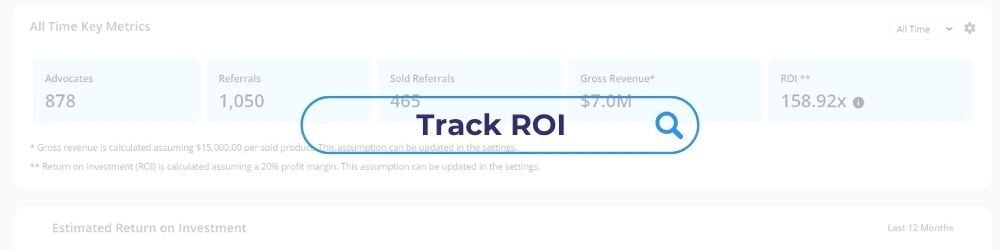
You can calculate ROI with a spreadsheet, but you'll spend hours every week doing it—and you'll probably miss things. Referral software analytics automate the tracking and give you real-time visibility into program performance.
At minimum, you need to see who referred whom, when the referral happened, what stage it's at in your sales process, and whether it closed. Good analytics go further by showing you which advocates are most active, which referral sources convert the best, and how your metrics trend over time.
GTR's admin dashboard gives contractors exactly this visibility, tracking every referral from submission through conversion and payout—all in one place.
Manual reward distribution creates tracking problems. If you're writing checks or sending gift cards by hand, you lose the audit trail that connects reward costs to specific referrals.
Automated rewards through a platform like GTR Wallet solve this by logging every payout automatically. You see exactly what you spent, tied to exactly which referral, without any spreadsheet reconciliation.
Monthly or quarterly reports tell you what happened. Real-time dashboards tell you what's happening—so you can make adjustments before small problems become expensive ones.
If advocate participation suddenly drops, you want to know this week, not three months from now. If a particular sales rep is closing referrals at twice the rate of others, you want to understand why and replicate their approach.
Industry data suggests that well-run referral programs deliver 4x higher ROI than digital advertising. But "well-run" is doing a lot of work in that sentence.
Your baseline matters. If you're already doing great work and have happy customers, you have more referral potential waiting to be captured. If customer satisfaction is inconsistent, fix that first—no software can manufacture enthusiasm from unhappy clients.
Market factors play a role too. Contractors in tight-knit communities where neighbors know each other tend to see stronger referral performance than those serving transient populations.
Contractors who commit to their referral programs typically see 15-30% of new business coming from referrals by the end of year one. Those who stick with it and optimize based on data often reach 40-50% by year three.
That shift fundamentally changes your business economics. Instead of spending more on ads as you grow, you're building a referral flywheel that compounds over time.
Most contractors see their first measurable results within 60-90 days of launching a structured program. Full ROI impact—where referrals become a predictable growth channel—typically takes 6-12 months of consistent effort.
The key word is consistent. Programs that launch with fanfare and then get ignored don't produce results. Programs that become part of daily operations do.
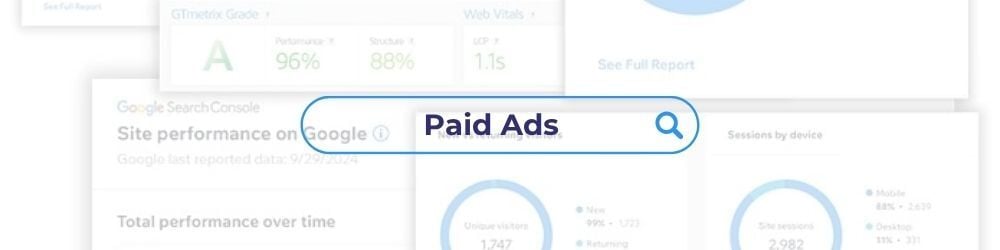
Comparing apples to apples requires tracking the same metrics across both channels. Here's a framework that works for most contractor businesses.
For paid ads, add your ad spend, management fees (if using an agency), and any landing page or creative costs. Divide by the number of closed deals from that channel.
For referrals, add your software costs, reward payouts, and any promotional expenses. Divide by closed deals from referrals. This gives you a true cost per customer acquisition for each channel.
Tag customers in your CRM by how they found you. After a year, compare the average total revenue from customers who came through referrals versus those from paid ads.
Don't forget to count referrals from each group. Referred customers often become referrers themselves, multiplying their value in ways that paid leads rarely do.
Paid advertising requires ongoing management, optimization, and creative refreshes. Referral programs—especially automated ones—require less hands-on time once they're running.
Consider what your team could accomplish with the hours they'd save. For many contractors, that time goes back into selling, which compounds the referral program's impact.
Even well-intentioned programs can underperform. Here are the most frequent issues we see—and how to avoid them.
If sending a referral requires a phone call, an email chain, or filling out a complicated form, most customers won't bother. The gap between "I should refer them" and "I just referred them" needs to be as close to zero as possible.
Mobile apps and shareable links remove this barrier. Your advocates can send a referral in 30 seconds while they're still excited about their new roof or kitchen.
Nothing kills referral momentum like advocates wondering if they'll ever get paid. If rewards take weeks to arrive—or worse, require advocates to follow up—you're training people not to refer you.
Automated reward payouts solve this. When advocates see their reward hit their account days after a closed deal, they're motivated to refer again.
A referral program isn't a set-it-and-forget-it tool. Your customers need regular reminders that the program exists and that you appreciate their referrals.
Build referral asks into your standard customer touchpoints: project completion emails, follow-up calls, warranty check-ins, and even your invoices. Make referring you a natural part of the customer relationship.
Some contractors track referral count but ignore close rates. Others focus on revenue but don't know their cost per acquisition. Without a complete picture, you can't identify what's working and what needs improvement.
Pick five to seven core metrics and review them monthly. Consistent measurement beats occasional deep dives every time.

GetTheReferral tracks every referral from the moment it's submitted through conversion and payout. You see which advocates are most active, which referrals are in your pipeline, and exactly how much revenue your program has generated.
This isn't data buried in reports you never read. It's a real-time dashboard that your sales team actually uses.
GTR Wallet handles reward payouts automatically—cash, gift cards, or prepaid debit cards delivered without manual intervention. Advocates get their rewards quickly, you get clean records for ROI tracking, and nobody has to chase down payments.
This automation isn't just about convenience. It's about creating a reliable experience that encourages advocates to keep referring.
Your customers carry their phones everywhere. A branded mobile app lets them submit referrals, check their status, and see their rewards from anywhere. This accessibility drives higher participation rates, which directly improves your ROI.
Sales reps can capture new advocates on-site too, turning a great installation day into the start of a referral relationship before the customer's excitement fades.
GetTheReferral connects with your existing CRM and field tools, ensuring referral data flows into the systems you already use. No duplicate entry, no lost information, no confusion about which leads came from where.
Accurate attribution is the foundation of accurate ROI measurement. Without it, you're guessing.
Whether you're using referral software or building your own tracking system, your ROI dashboard should answer these questions at a glance.
Include total referrals received, referrals closed, revenue from closed referrals, total reward payouts, and calculated ROI. Trend these numbers month over month to spot patterns.
Also track your referral-to-close ratio and compare it against your other lead sources. This comparison often reveals opportunities to shift budget toward your highest-performing channel.
Know how many active advocates you have, how many referrals came from top performers versus the general population, and what your advocate participation rate looks like. This data helps you identify opportunities to engage dormant advocates or reward your champions.
Break down your program costs by category: software, rewards, promotional expenses, and staff time. Divide by closed deals to get your true cost per acquisition, then compare against paid channels.
Review this monthly. Small cost creep can erode ROI over time if you're not paying attention.
The trends all point toward referrals becoming more important, not less. Here's what we're seeing.
Google Ads costs have increased steadily for years, and there's no sign of that reversing. As more contractors compete for the same keywords, cost per lead will keep climbing.
This makes referral programs relatively more valuable over time. Your word-of-mouth channel doesn't get more expensive just because your competitors are spending more on ads.
People trust advertising less than ever. They trust their neighbors, friends, and family more. This shift favors contractors who can activate their existing customer base as advocates.
The contractors who build strong referral programs now are positioning themselves for a future where trust-based marketing outperforms interruption-based advertising.
Referral software keeps getting better at tracking attribution, automating workflows, and delivering actionable insights. What used to require complex spreadsheets now happens automatically.
This makes it easier than ever to prove referral ROI—and to optimize programs based on real data rather than assumptions.
Measuring referral program ROI isn't complicated, but it does require commitment. You need to track the right metrics, compare referrals against your other lead sources honestly, and use the data to make decisions.
The contractors who get this right gain a sustainable competitive advantage. While competitors keep spending more on increasingly expensive paid ads, you're building a referral engine that compounds over time. Every happy customer becomes a potential source of new business, and every referral that closes reinforces the value of the program.
Start by calculating your current referral ROI—even if it's a rough estimate. Then identify one or two metrics to improve and track your progress monthly. Small, consistent improvements add up to significant results.
The best time to build a referral program was five years ago. The second best time is now.

A well-run referral program typically delivers 300-400% ROI or higher. This means for every dollar you spend on software and rewards, you generate three to four dollars in revenue. GetTheReferral's analytics make it easy to track exactly where your program stands.
Add up all your referral program expenses for the month—software fees, reward payouts, and promotional costs. Divide by the total number of referrals received. This gives you your cost per referral, which you can compare against paid lead costs.
Referral leads come with built-in trust. The referring customer has already vouched for your quality, reliability, and professionalism. This pre-qualification means less skepticism and faster decisions. GetTheReferral helps you capture and track these high-converting leads systematically.
Most contractors see initial results within 60-90 days. Meaningful, consistent ROI typically develops over 6-12 months as the program becomes part of your regular operations. Patience and consistent promotion make the difference.
Focus on referral count, close rate, cost per acquisition, average job value from referrals, and advocate participation rate. GetTheReferral's dashboard tracks all these metrics automatically, giving you real-time visibility into program performance.
Yes, for most growing contractors. Manual tracking eats up hours every week, creates errors, and makes rewards inconsistent. Referral software automates tracking and payouts while giving you reliable data for ROI calculations. The time savings alone often justify the investment.
Rewards drive participation, but they also reduce net revenue per referral. The key is finding the right balance—rewards high enough to motivate advocates without eating into your margins. GetTheReferral's automated reward system helps you test different amounts and track the impact on participation and ROI.
 Mikayla Martinsen: September 16, 2026
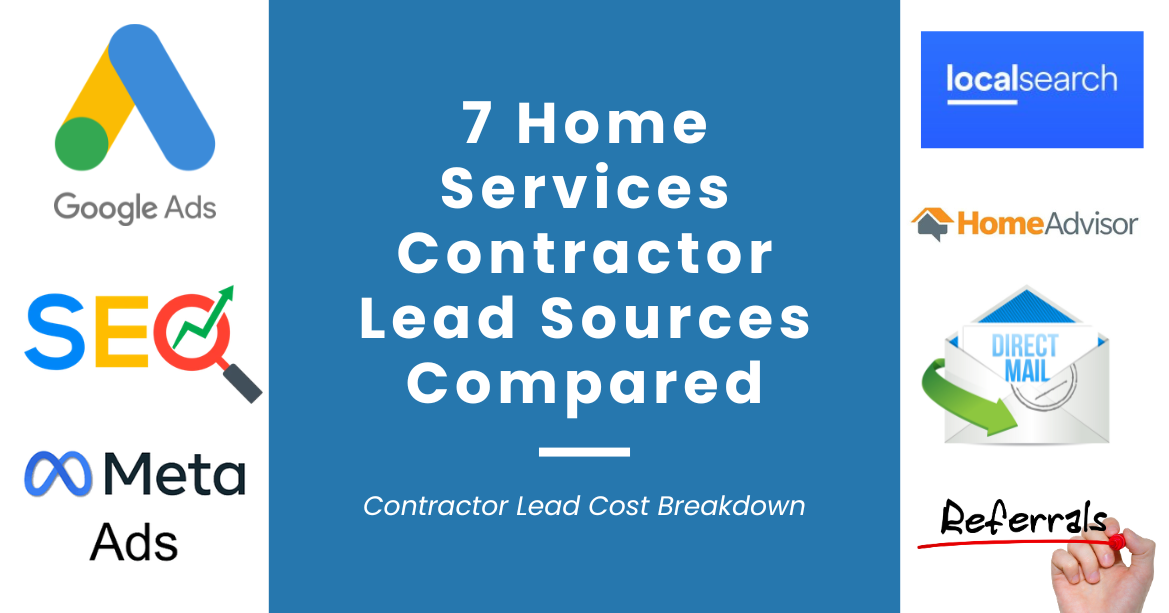
Contractor Lead Costs: 7 Lead Sources Compared
 Mikayla Martinsen: September 15, 2026
Contractor Lead Quality: How to Get More Leads That Actually Close More leads sound like the answer to every contractor's growth problem.
 Mikayla Martinsen : May 25, 2026
Learn 10 referral analytics metrics that prove ROI for home services and roofing. Track what matters with GetTheReferral's automated reporting.
 Mikayla Martinsen : September 8, 2026
See how your referral program compares to other home services contractors. Get GTR's free 2026 Referral Benchmark Report on volume, conversion, and...
 Mikayla Martinsen : April 20, 2026
Discover the best referral software for contractors in 2026. We've evaluated top platforms to help you automate referrals and boost your ROI...